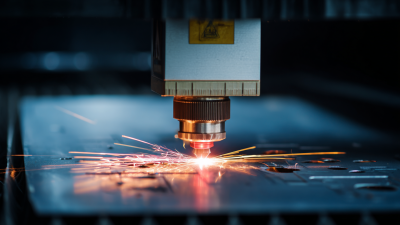
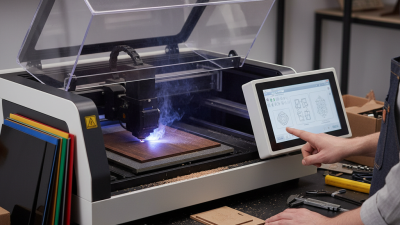
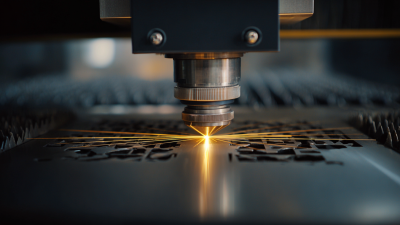
Choosing among the top laser CNC machines for global buyers requires more than comparing cutting speed and advertised power. A suitable laser CNC should match the material, production volume, workshop space, and operator experience. Steel sheets, acrylic panels, plywood, and leather each demand different settings. A machine that performs beautifully on thin plywood may struggle with reflective metal. That difference matters.
This guide examines practical features that experienced buyers should verify before placing an international order. We will consider laser source quality, working area, positioning accuracy, cooling systems, software compatibility, safety enclosure design, and long-term maintenance. A 1300 × 900 millimeter bed may suit custom signs, while a larger 1530 × 3050 millimeter format may better support furniture components. Real factory conditions can expose weaknesses that brochures omit.
Look beyond the first quotation. Ask about installation support, replacement lenses, tube or source lifespan, warranty terms, training, and response times. Confirm electrical requirements and packaging protection before shipment. A reliable supplier should provide test cuts, clear technical documents, and traceable specifications. Still, no machine is perfect. Marketing claims can sound precise, yet actual results depend on material quality, ventilation, focus control, and operator habits. Even experienced teams sometimes underestimate maintenance time. Careful buyers should compare verified samples, total ownership costs, and after-sales communication. The strongest choice is not always the fastest machine. It is the model that delivers consistent results, manageable risks, and practical support across its working life.
What Are Laser CNC Machines and How Do They Work?
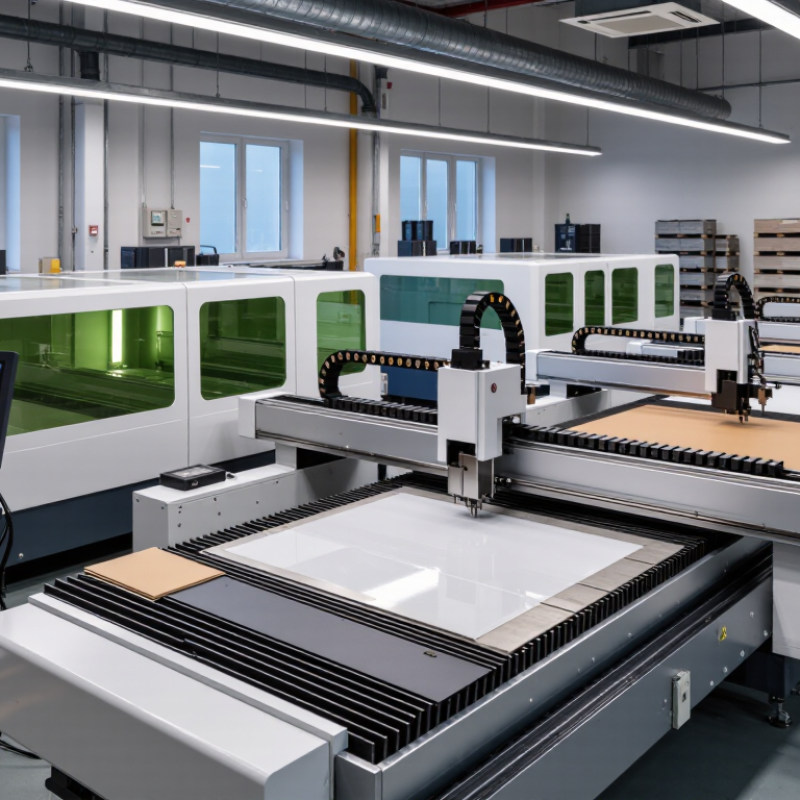
Laser CNC machines use computer-controlled movement to guide a focused laser across a material. They can cut, engrave, or mark with high positional accuracy. The process begins with a CAD drawing. CAM software converts that drawing into machine instructions. The controller then moves the laser head along the X, Y, and sometimes Z axes.
The beam travels through mirrors or a fiber pathway before reaching a focusing lens. A narrow focal point creates intense heat on the work surface. Assist gas, such as air or nitrogen, can remove molten material from the cut. Power, speed, focus, and pulse settings must match the material. Thin plywood may need different settings than stainless steel. Small changes matter.
A reliable machine needs more than a powerful laser. Check its enclosure, emergency stop, ventilation, grounding, and door interlocks. These features support safer operation and easier compliance with local requirements. Global buyers should also examine voltage compatibility, spare-part access, software support, and technician training. A low purchase price may become expensive when replacement lenses or service take weeks to arrive.
In practical use, clean optics and accurate calibration often affect results more than advertised speed. A perfect cut is not guaranteed. Dust, warped sheets, and incorrect focus can create rough edges. Operators should run test pieces before production. I would also question unclear accuracy claims. A machine that performs well on one material may perform poorly on another. That detail is easy to overlook.
What Are Laser CNC Machines and How Do They Work?
Laser CNC machines use computer-controlled motion systems to focus a laser beam and remove, melt, or vaporize material along programmed toolpaths. The chart compares nominal wavelengths: CO₂ lasers commonly operate at 10.6 μm, while fiber and Nd:YAG lasers operate near 1.06 μm. Wavelength, laser power, optics, assist gas, and material properties all influence cutting performance, so wavelength alone does not determine which machine is best.
Choosing a laser CNC machine starts with the material, not the advertised wattage. Fiber lasers suit stainless steel, carbon steel, aluminum, brass, and copper. Their short wavelength supports efficient metal absorption and fast sheet processing. According to Grand View Research’s 2024 analysis, the laser cutting machine market may grow at about 8% annually through 2030. That growth reflects wider adoption in fabrication, automotive components, and industrial workshops.
CO2 lasers remain practical for wood, acrylic, leather, paper, and many non-metallic sheets. A 100-watt system can cut acrylic with polished edges, while plywood may require slower passes and air assistance. UV lasers work better for delicate plastics, films, glass, and electronic markings. Their lower heat effect can reduce melting and discoloration. Small details matter here.
Material thickness changes everything. A fiber laser may cut thin copper well but need careful settings on reflective surfaces. CO2 machines can produce excellent wood engraving, yet resinous timber may smoke or char. The International Energy Agency reports that global manufacturing efficiency increasingly depends on electrification and process optimization, not power alone. That is worth remembering. Buyers should test samples, inspect kerf width, and measure edge quality before ordering. Published performance figures often use ideal laboratory conditions, so real factory results may be slower, dirtier, and less perfect.
Top Laser CNC Machines for Global Buyers?
Global buyers should compare laser CNC machines by workflow, not by power alone. A higher wattage rating may cut thicker material, but it can reduce edge control on thin sheets. Check the laser source type, rated power, cutting speed, positioning accuracy, and repeatability. These specifications reveal practical performance more clearly.
Measure the working bed against your usual sheet sizes. A 1300 × 2500 mm bed may suit furniture panels, while a smaller bed can reduce energy use and floor space. Examine acceleration, table stability, extraction capacity, and maximum duty cycle. Ask for cutting samples using your actual material and thickness. Photographs are useful, but they cannot replace a tested edge.
Tips: Build a comparison sheet with five columns: power, bed size, accuracy, operating cost, and service response. Include electrical voltage and software compatibility for your country. Confirm safety interlocks, ventilation requirements, and maintenance access. Request references from buyers with similar production volumes. Spare lenses, nozzles, filters, and cooling parts can affect downtime more than expected.
Do not trust one impressive specification. A machine may advertise excellent accuracy under laboratory conditions, yet perform differently after long shifts. I would also question vague warranty wording and unclear installation duties. Regional training, documented manuals, and reachable technical support often matter as much as cutting speed. Some buyers overlook noise and heat until the machine enters daily production. That mistake is expensive.
| Machine Category | Typical Configuration | Laser Power | Working Area | Maximum Cutting Speed | Positioning Accuracy | Typical Mild-Steel Capacity | Recommended Applications | Key Comparison Point for Global Buyers | Best Fit |
|---|---|---|---|---|---|---|---|---|---|
| Entry-Level Fiber Laser CNC | Flat-bed machine with manual or semi-automatic loading | 1.5–3 kW | 1,500 × 3,000 mm | Up to 30 m/min | ±0.05 mm/m | Up to 16 mm | Small fabrication shops, signage, brackets, enclosures, and general sheet-metal work | Compare total installed cost, included software, electrical requirements, and availability of local service support. | Low-volume production |
| General-Purpose Fiber Laser CNC | Automatic edge finding with pneumatic or electric height sensing | 3–6 kW | 1,500 × 3,000 mm | Up to 40 m/min | ±0.03 mm/m | Up to 25 mm | Job shops, HVAC components, agricultural equipment, furniture parts, and structural components | Check cutting charts for the exact material grades, nozzle system, piercing time, and operating-gas consumption. | Most versatile |
| High-Power Fiber Laser CNC | Rigid enclosed machine with automatic focus and advanced piercing control | 8–12 kW | 2,000 × 4,000 mm | Up to 50 m/min | ±0.03 mm/m | Up to 35 mm | Heavy fabrication, construction machinery, steel-service centers, and high-throughput production | Evaluate transformer capacity, chiller performance, fume extraction, assist-gas infrastructure, and long-term energy cost. | High throughput |
| Tube and Sheet Fiber Laser CNC | Combined flat-sheet table and rotary tube-cutting axis | 3–6 kW | Sheet: 1,500 × 3,000 mm Tube: 20–220 mm diameter |
Up to 35 m/min | ±0.05 mm/m | Up to 25 mm | Frames, handrails, fitness equipment, lighting, automotive components, and tubular furniture | Confirm maximum tube length, round and square tube ranges, chuck design, remnant handling, and profile-library compatibility. | Mixed production |
| Large-Format Fiber Laser CNC | Extended flat-bed platform with shuttle table or dual-table loading | 6–12 kW | 2,000 × 6,000 mm | Up to 40 m/min | ±0.05 mm/m | Up to 30 mm | Large panels, shipbuilding parts, industrial equipment, trailers, and steel-service processing | Compare floor space, loading method, material-support design, shipping dimensions, installation requirements, and safety access. | Large sheets |
| Precision Fiber Laser CNC | High-rigidity platform with calibrated motion system and closed-loop monitoring | 1.5–3 kW | 1,000 × 2,000 mm | Up to 25 m/min | ±0.02 mm/m | Up to 12 mm | Electrical cabinets, precision brackets, laboratory equipment, electronics housings, and small components | Prioritize repeatability, thermal stability, calibration procedures, inspection records, and software support rather than maximum power. | Fine detail |
| CO₂ Laser CNC for Non-Metal Materials | Enclosed gantry system with air assist and extraction unit | 80–150 W | 900 × 1,300 mm | Up to 30 m/min | ±0.05 mm | Not intended for general metal cutting | Acrylic, wood, plywood, textiles, rubber, paper, and selected plastics | Verify material compatibility, ventilation standards, fire protection, lens availability, and restrictions on PVC or chlorine-containing materials. | Non-metal work |
For global buyers, laser CNC selection should begin with risk control, not cutting speed. The U.S. Bureau of Labor Statistics recorded 2.6 million nonfatal workplace injuries in 2023. That figure includes many machine-related incidents. It shows why safety evidence deserves careful attention.
Ask for documented compliance with IEC 60825-1 for laser classification and ISO 11553-1 for laser processing equipment. ISO 12100 should support the machine’s risk assessment. A properly enclosed system should prevent beam exposure during normal operation. Door interlocks, emergency stops, viewing windows, and extraction systems need functional test records. Look closely. A printed certificate proves little without serial numbers, test dates, and the responsible laboratory.
Regional requirements also matter. European buyers may need machinery conformity documentation under Regulation (EU) 2023/1230, while North American users often assess alignment with ANSI Z136.1 and applicable workplace rules. Electrical documentation should identify voltage, grounding, protective devices, and fault behavior. Ventilation evidence should address smoke, dust, and fire risk, not only airflow volume. The U.S. National Institute for Occupational Safety and Health repeatedly emphasizes engineering controls before relying on personal protective equipment. PPE is not a substitute for enclosure design.
One uncomfortable lesson is easy to miss. Installation can change the risk profile. A compliant machine may become unsafe beside combustible panels or with disabled interlocks. Buyers should request manuals, training records, maintenance intervals, and acceptance-test procedures before shipment. Certification is a starting point, not the finish.
Global buyers should evaluate laser CNC suppliers beyond the machine’s quoted price. Grand View Research estimates the global laser cutting machine market will grow at about 7% annually through 2030. That growth attracts capable manufacturers and weak intermediaries. Request verified cutting samples using your actual steel, aluminum, or sheet thickness. Ask for measured kerf width, cutting speed, edge quality, and gas consumption. Marketing claims are not enough.
Calculate total ownership cost over five years. Include power use, lenses, nozzles, assist gases, software, installation, training, freight, duties, and downtime. Fortune Business Insights values the laser cutting machine market at several billion dollars and expects strong expansion through the decade. However, market growth does not guarantee supplier reliability. Compare at least three written quotations. Check whether the control system supports common file formats and whether replacement parts have clear pricing. A cheap machine may become expensive after one failed component.
After-sales support deserves equal attention. Request warranty terms, response-time targets, remote diagnosis procedures, and technician coverage in your region. Ask for two customer references with similar production volumes. ISO 9001 certification can indicate documented quality processes, but it cannot prove fast service. I would also test the supplier’s response before ordering. Send a technical question and measure the reply. Slow support is a warning. My own evaluation would remain cautious: published reports describe market direction, not individual supplier performance. Use factory audits, acceptance tests, and contract penalties for missed specifications.