China Top 10 Tiny Electric Truck Manufacturers
The China Top 10 Tiny Electric Truck Manufacturers represent a fast-changing segment of commercial mobility. These companies develop compact electric vehicles for urban deliveries, factory campuses, farms, resorts, and neighborhood services. A Tiny Electric Truck may look modest, yet its battery quality, payload balance, braking system, and after-sales support determine real value.
This guide examines manufacturers through practical criteria. We consider production experience, vehicle customization, motor performance, battery options, charging design, safety features, and export capability. Factory scale also matters, but it does not tell the whole story. A smaller manufacturer may offer flexible designs, while a larger supplier may provide stronger quality control and parts availability.
Real-world use can expose weaknesses quickly. A truck carrying boxes through narrow streets needs predictable steering and stable suspension. A vehicle working outdoors needs weather-resistant wiring and dependable battery protection. Buyers should also verify certificates, testing records, warranty terms, and service response before placing an order. Product photographs are not enough.
Some rankings remain subjective. Supplier data can change, and advertised specifications may differ from tested performance. That is worth admitting. This overview therefore avoids treating every manufacturer as equally suitable. Instead, it highlights practical strengths, possible limitations, and questions buyers should ask. The best choice depends on operating distance, road conditions, payload needs, charging access, and local regulations. Small details matter.
Definition and Key Features of Tiny Electric Trucks
China’s tiny electric trucks are compact commercial vehicles designed for short urban deliveries, service routes, and narrow streets. A practical definition places them below 3.5 tonnes of gross vehicle weight, although the category has no universal boundary. Payload usually matters more than headline range.
The IEA’s Global EV Outlook 2024 recorded almost 14 million electric-car sales in 2023. It also reported continuing growth in electric medium- and heavy-duty trucks. Tiny trucks are smaller, but they benefit from the same battery and charging advances. Their key features include a low center of gravity, regenerative braking, a short turning radius, and an enclosed cargo area. Battery capacity often ranges from roughly 15 to 60 kWh, depending on payload and route demands. Real-world range may fall sharply with cold weather, heavy cargo, or repeated stops.
The weakness is obvious. “Tiny” is not a precise engineering class. A vehicle with impressive empty-load range may perform poorly on a delivery route. Testing should record payload, average speed, road gradient, charging time, and cabin heating use. The U.S. Department of Energy’s Alternative Fuels Data Center identifies charging access and vehicle duty cycles as major fleet-planning factors. Operators should also check battery protection, braking performance, visibility, and compliance with applicable safety standards. Small dimensions help. They do not remove operational risks.
China Top 10 Tiny Electric Truck Manufacturers - Definition and Key Features of Tiny Electric Trucks
This table summarizes common characteristics of tiny electric trucks available in the Chinese market. “Tiny electric truck” is a descriptive market term, not a single standardized vehicle class. Figures below are indicative ranges; specifications vary by vehicle configuration, test cycle, payload, and local regulations. Manufacturer and brand names are intentionally omitted, and the rows are not a company ranking.
| Dimension | Typical Characteristics | Definition and Practical Significance |
| 1. Vehicle Definition | A compact, battery-powered commercial vehicle designed mainly for light-duty goods transport. | The term generally describes small electric trucks used for short-distance delivery, business operations, and light cargo work. It does not identify one uniform technical or regulatory category. |
| 2. Vehicle Dimensions | Many compact models are approximately 3–4.5 m long, although dimensions differ by cab and cargo-body layout. | A compact footprint can make these trucks easier to maneuver and park in narrow streets, residential areas, markets, and urban delivery zones. |
| 3. Payload Capacity | Light-duty configurations commonly carry several hundred kilograms to around 1.5 tonnes; exact limits are vehicle-specific. | Payload must be checked against the vehicle’s rated limits and applicable rules. Cargo weight, passengers, and fitted equipment all contribute to the load carried. |
| 4. Battery Capacity | Small commercial EV batteries often fall in the approximate 10–40 kWh range. | Battery capacity affects driving range, vehicle cost, and charging time. A larger battery does not guarantee a proportional increase in real-world range, particularly under heavy loads. |
| 5. Driving Range | Published ranges can span roughly 100–300 km per charge, depending on the model and test cycle. | Test-cycle figures are not a promise of daily operating range. Payload, speed, temperature, road conditions, and use of heating or air conditioning can reduce the distance achievable in service. |
| 6. Electric Motor | Motor output varies widely; compact light-duty trucks may use motors rated in the tens of kilowatts. | Electric motors deliver torque without a conventional multi-gear transmission, which can support smooth starts and frequent stop-and-go driving. Suitability depends on load, gradients, and duty cycle. |
| 7. Charging | AC charging is common; charging time depends on battery size, onboard charger, and available power. DC fast charging is configuration-dependent. | Operators should confirm connector type, charging power, and charging compatibility before purchase. Overnight depot charging can suit vehicles that return to base regularly. |
| 8. Cargo-Body Options | Common formats include a flatbed, enclosed cargo box, or purpose-built body. | The body style determines how goods are loaded, protected, and secured. The usable cargo area and permitted load should be assessed alongside the advertised payload. |
| 9. Common Applications | Local parcel delivery, retail and market supply, campus logistics, municipal services, and short-distance business transport. | These applications typically involve predictable routes and frequent stops. Route length, daily mileage, cargo volume, and access to charging are key factors when selecting a vehicle. |
| 10. Operating Considerations | Running costs depend on electricity prices, energy use, maintenance, insurance, financing, and vehicle utilization. | Electric drivetrains have fewer routine powertrain service items than internal-combustion vehicles, but tires, brakes, suspension, battery condition, and charging equipment still require proper maintenance. |
China’s Leading Tiny Electric Truck Manufacturers
China’s leading tiny electric truck manufacturers are reshaping short-distance transport. Their vehicles serve farms, campuses, warehouses, markets, and narrow urban streets. Compact dimensions matter when loading bays are crowded. A turning radius near four meters can save repeated reversing.
Reliable manufacturers usually offer several battery options, including lithium iron phosphate systems. This chemistry supports stable daily operation and predictable maintenance. Buyers should examine payload ratings, motor output, braking performance, and charging protection. A useful inspection includes weld quality, tire wear, cable routing, and dashboard clarity. Small details reveal factory discipline.
Production scale is important, but it does not prove long-term reliability. Ask for battery test records, component traceability, service procedures, and spare-parts availability. Check whether the stated range reflects real loads, cold weather, and frequent stops. Marketing figures can feel optimistic. They often are. A careful buyer should request independent testing and review local road requirements before ordering. After-sales training also matters, especially for fleet operators with limited technical staff. No shortlist is flawless, and some manufacturers may improve quickly after feedback. That possibility deserves attention rather than blind confidence.
Main Product Types and Typical Applications
China Top 10 Tiny Electric Truck Manufacturers
Main Product Types and Typical Applications
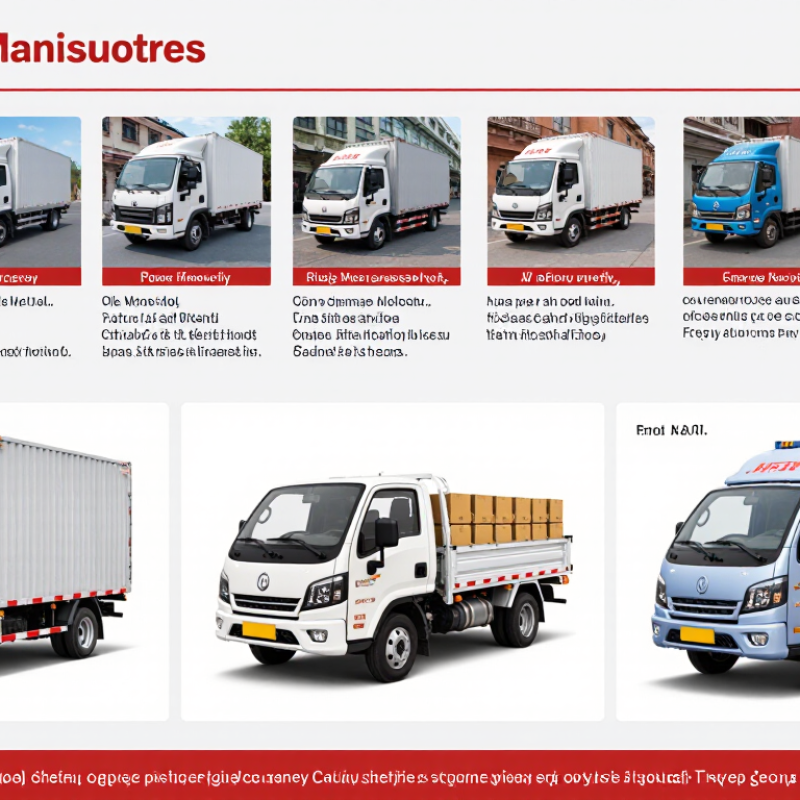
China’s leading tiny electric truck manufacturers usually offer several practical body types. Flatbed models carry vegetables, tools, cartons, and building materials. Their open platforms allow quick loading in markets and industrial parks. Box trucks protect parcels from rain, dust, and direct sunlight. They suit neighborhood deliveries, pharmacies, bakeries, and small warehouses.
Dump-style electric trucks serve landscaping, construction maintenance, and municipal cleaning tasks. Their hydraulic beds can handle soil, leaves, and light waste within approved operating limits. Some manufacturers also produce refrigerated bodies for short-distance food transport. These vehicles need stable temperature control, suitable insulation, and careful route planning. A cold box is not automatically a professional refrigerated truck.
Tiny electric trucks also support campuses, resorts, airports, factories, and agricultural sites. Utility versions may carry maintenance equipment through narrow lanes. Low-speed models can reduce noise near hotels, schools, and residential areas. Enclosed cabins improve comfort during winter rain, but they may limit cargo volume.
Practical buyers should match payload, turning radius, battery capacity, charging access, and road regulations. A vehicle that works well inside a factory may perform poorly on public roads. Tire selection matters on wet farmland. Braking performance matters on slopes. In fleet assessments, operators often underestimate charging downtime and driver training. That mistake can reduce daily productivity. Local service coverage, spare parts, warranty terms, and battery safety documentation deserve equal attention. Small does not mean simple.
Battery Systems, Performance, and Safety Standards
China Top 10 Tiny Electric Truck Manufacturers: Battery Systems, Performance, and Safety Standards
Battery quality shapes every tiny electric truck. The International Energy Agency reported that China held about 75% of global battery manufacturing capacity in 2023. This scale supports competitive pricing, but capacity alone proves little. Buyers should request cell chemistry, usable capacity, thermal protection, and cycle-test records. A 30 kWh pack may suit short urban routes, while heavier loads can sharply reduce range.
Real performance depends on more than brochure figures. Payload, gradients, tire pressure, temperature, and regenerative braking all change energy use. The IEA recorded nearly 14 million electric car sales worldwide in 2023, showing rapid market growth. However, commercial trucks face longer working hours and harsher charging patterns. Fleet trials should measure energy consumption per 100 kilometers under loaded conditions. Small details matter.
Safety documentation deserves equal attention. UNECE R100 addresses rechargeable electrical energy storage systems, while UNECE R10 covers electromagnetic compatibility. In China, GB 38031 sets traction-battery safety requirements, including protection against thermal events. ISO 26262 also supports functional-safety management for electronic systems. Independent testing is valuable, yet no certificate replaces careful inspection. Check isolation resistance, crash protection, charging locks, and emergency disconnect access. One weakness remains: published range tests rarely reflect crowded streets, winter mornings, or overloaded cargo beds. That gap deserves more honest reporting.
China Tiny Electric Truck Market Benchmark
Representative payload-capacity ranges for common Chinese tiny electric truck classes, based on publicly documented vehicle specifications.
Typical battery systems use lithium iron phosphate chemistry with nominal system voltages from approximately 72 V to 144 V. Public specifications commonly indicate practical driving ranges of about 100–300 km, depending on payload, battery capacity, road conditions, and testing method. Safety compliance is generally associated with applicable Chinese requirements such as GB 18384 for electric-vehicle safety, GB 7258 for motor-
How to Select a Reliable Chinese Manufacturer
Selecting a reliable Chinese tiny electric truck manufacturer requires evidence beyond an attractive brochure. The China Association of Automobile Manufacturers reported 9.495 million new-energy vehicle sales in 2023, with annual growth of 37.9%. This fast expansion creates capable suppliers, but also uneven quality. IEA’s Global EV Outlook 2024 found that China represented about 60% of global electric car sales in 2023. Market scale matters. It does not guarantee factory discipline.
Request a factory audit, production photos, and recent export references. Check whether the manufacturer controls battery assembly, motor integration, and final inspection. Ask for test records under rated payload, not unloaded range. A practical trial should include a full battery, uneven roads, repeated braking, and a measured payload. Test it yourself. Tiny trucks often look identical until climbing a wet ramp.
Review battery safety reports, charger compatibility, warranty terms, and spare-parts lead times. Confirm compliance with the destination market’s vehicle, electrical, and electromagnetic requirements. ISO 9001 certification can support process control, but it is not proof of product reliability. Ask for the certificate’s scope and issuing body. Also inspect welding seams, door alignment, tire load ratings, and corrosion protection. These details reveal experience.
Do not rely on one successful sample. Require a pre-shipment inspection and clear acceptance criteria. My concern is simple: buyers sometimes evaluate price before service capacity. That order can become expensive. A smaller supplier may respond faster, yet lack stable parts inventory. A larger factory may offer better systems, but slower customization. Compare evidence, not promises.
FAQS
It is a compact commercial vehicle for short urban deliveries and service routes. The category has no universal boundary. Many models remain below 3.5 tonnes gross vehicle weight.
They suit farms, campuses, warehouses, markets, and narrow city streets. A short turning radius helps near crowded loading bays. Small dimensions help, but they do not remove driving risks.
Battery capacity often ranges from about 15 to 60 kWh. Real-world range changes with cargo weight, weather, hills, and frequent stops. Brochure figures may feel optimistic.
Heavy cargo increases energy use and can reduce range sharply. A truck with excellent empty-load range may struggle when fully loaded. Test it with real cargo.
Request usable capacity, cell chemistry, thermal protection, and cycle-test records. Check the battery enclosure for damage or weak sealing. A larger battery is not automatically better.
Record energy use per 100 kilometers under loaded conditions. Include average speed, road gradient, tire pressure, and heating use. Measure charging time too. Small omissions can distort results.
Inspect braking performance, visibility, cable routing, charging locks, and emergency disconnect access. Check battery protection against thermal events. Look for clear dashboard warnings. Do not rely on certificates alone.
Ask for battery records, component traceability, service procedures, and spare-parts plans. Inspect welds, tires, cables, and dashboard layout. Small details reveal production discipline. Still, no shortlist is flawless.
Conclusion
This guide explores the definition and key features of a Tiny Electric Truck, including its compact dimensions, electric powertrain, useful payload capacity, and suitability for narrow streets and short-distance transportation. It introduces China’s leading manufacturers in this category without focusing on individual brand names, while explaining common product types such as mini cargo trucks, utility vehicles, refrigerated models, and light-duty delivery trucks. These vehicles are widely used in urban logistics, agriculture, industrial parks, community services, and other low-speed transport applications.
The article also reviews battery systems, driving range, charging methods, load performance, braking systems, and essential safety standards. Finally, it explains how to select a reliable Chinese manufacturer by evaluating production capability, battery quality, customization options, certification, after-sales support, delivery experience, and quality-control procedures. This information can help buyers compare suppliers more efficiently and choose a practical, safe, and cost-effective Tiny Electric Truck for their specific operational needs.
