How to Choose the Right Aluminium Sheet for Your Project?
Choosing the right aluminium sheet can be a daunting task. With numerous options available, how do you select the best one for your project? Industry expert John Harper says, "The right aluminium sheet can transform your project into something exceptional." This statement emphasizes the importance of making informed decisions.
Aluminium sheets come in various grades, sizes, and finishes. Each type serves a specific purpose. Whether you need lightweight sheets for automotive applications or thicker ones for structural integrity, the choices are vast. It's essential to understand the properties of each option to match them with your project's requirements.
However, many people overlook critical details. They may prioritize cost over quality, which can lead to future complications. Knowing the specific needs of your project helps minimize regrets. A thorough consideration of your requirements ensures that the aluminium sheet you choose enhances your project rather than hinders it.

Understanding the Different Types of Aluminium Sheets Available
Choosing the right aluminium sheet requires a solid understanding of the available types. Aluminium sheets vary in thickness, alloy, and temper. For projects demanding high strength, consider 7075 aluminium. This alloy boasts a tensile strength of around 570 MPa, offering excellent durability.
For applications requiring lightweight materials, 5052 aluminium is a common choice. Its excellent corrosion resistance makes it a favorite in marine environments. In fact, it ranks among the top alloys for such uses. With a tensile strength of about 260 MPa, it combines strength and weight efficiency.
Surface finishes are equally crucial. Mill finish provides a raw look but can be prone to oxidation. Anodized finishes enhance durability and appearance. Yet, some users overlook this aspect. They choose based solely on strength or weight. This can lead to reflections on the material's longevity in real-world applications. Understanding each type's specifics will save both time and resources in the long run.
How to Choose the Right Aluminium Sheet for Your Project?
| Type of Aluminium Sheet |
Thickness (mm) |
Weight (kg/m²) |
Common Uses |
| Milled Aluminium Sheet |
1.0 |
2.71 |
General structural uses, DIY projects |
| Anodized Aluminium Sheet |
0.8 |
2.14 |
Architectural applications, decorative surfaces |
| Painted Aluminium Sheet |
1.2 |
3.24 |
Signage, exterior cladding |
| Diamond Plate Aluminium Sheet |
3.0 |
7.43 |
Flooring, stair treads, ramps |
| Aluminium Composite Panel |
4.0 |
8.12 |
Curtain walls, interior partitions |
Factors to Consider When Selecting Aluminium Sheets for Your Project
When selecting aluminium sheets, several factors need thoughtful consideration. One crucial aspect is the thickness of the sheet. For example, thinner sheets (around 0.40 mm) may work well for lightweight applications, while thicker options (up to 3.0 mm) provide enhanced durability and strength. Industry reports indicate that thicker sheets are often used in construction and automotive industries, where structural integrity is vital.
Another important factor is the alloy type. Aluminium sheets come in various alloys, each suitable for specific applications. The 3000 series, for instance, exhibits excellent corrosion resistance, making it ideal for marine environments. Contrarily, the 6000 series offers a good balance of strength and workability, often chosen for architectural and structural projects. However, choosing the wrong alloy can lead to premature failure, which is a costly mistake.
Surface finish is also critical. Anodized finishes enhance durability and appearance, but they can be more expensive. Conversely, mill finishes are less costly but may require additional protection. An Australian industry survey revealed that around 45% of manufacturers chose anodized finishes for high-end projects. Ultimately, making the right choice requires careful evaluation of these factors, as overlooking one can jeopardize the entire project.
Comparison of Aluminium Sheet Properties for Various Applications
Assessing the Thickness and Weight of Aluminium Sheets
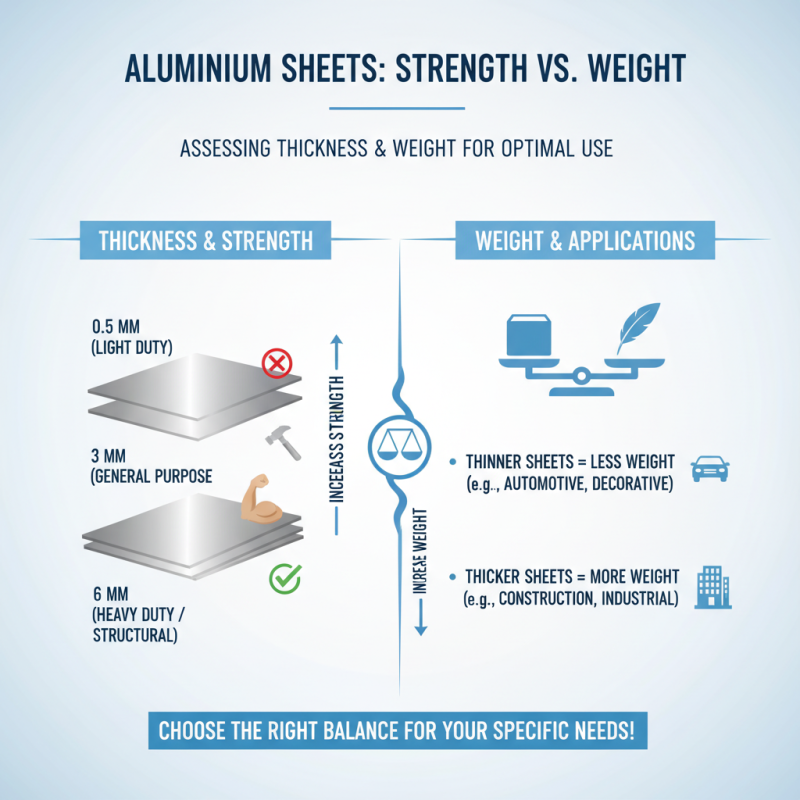
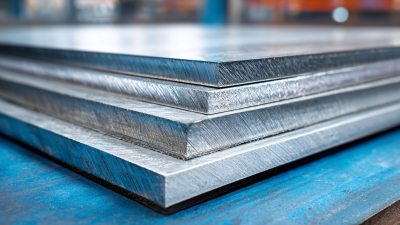
When choosing aluminium sheets, assessing thickness and weight is crucial. Aluminium sheets come in various thicknesses, typically ranging from 0.5 mm to 6 mm. Thicker sheets provide more strength but also add weight. For lightweight applications, thinner sheets may be ideal. However, thin sheets can be more prone to bending and damage. It’s vital to consider the balance between strength and weight for your specific needs.
Weight also plays a role in project logistics. Heavier sheets can be more challenging to handle and transport. If you're working with limited access or need to lift the sheets manually, lighter options may be better. Reflecting on your project’s requirements helps clarify the right choice. A mistake here can lead to difficulties during installation. Consider the final use of the sheet. Will it bear heavy loads, or is it purely decorative? This can influence your decision, too.
Sometimes, users overlook the importance of these factors. They might prioritize appearance over functionality. It's essential to think critically about the project as a whole. Asking for feedback can provide new insights. You may realize a thicker sheet is more suitable than previously thought. Each project is unique, and understanding these elements will lead to successful outcomes.
Evaluating the Surface Treatments and Finishes for Aluminium Sheets
When selecting aluminium sheets for your project, surface treatments and finishes are key considerations. Different finishes can significantly affect durability and aesthetic appeal. Popular finishes include anodizing, powder coating, and painting. Each of these options offers varying levels of protection and visual style.
Anodized aluminium, for instance, provides excellent corrosion resistance and a sleek appearance. The process creates a durable oxide layer, making it suitable for outdoor applications. Powder coating, on the other hand, offers a vibrant color palette. However, it may not withstand extreme temperatures as well as anodized surfaces. Paint is another choice, but it often requires frequent touch-ups and maintenance.
Reflecting on these options is essential. Some treatments might not be as durable as advertised. Choosing the wrong surface finish can lead to costly repairs later. Consider your project's specific demands. A shiny finish may look appealing but can be prone to scratches. In contrast, a matte finish hides imperfections better but can absorb dirt. Finding the right balance is crucial for lasting results.
Common Applications for Aluminium Sheets in Various Industries
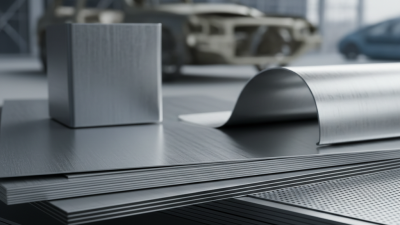
Aluminium sheets are versatile materials used across various industries. They can be found in automotive, aerospace, and construction sectors. This lightweight metal is favored for its strength and durability. For example, in the automotive industry, aluminium sheets are used to manufacture body panels, improving fuel efficiency. In the aerospace sector, they are essential for building aircraft structures due to their high strength-to-weight ratio.
When working with aluminium sheets, consider the specific application. Each project may have unique requirements. In construction, these sheets can serve as insulation or cladding. They resist corrosion, making them ideal for outdoor applications. Pay attention to the thickness and finish of the sheet for the best results.
Tips: Always test small samples before committing to large orders. Assess how the sheet handles bending and cutting. Not all sheets perform the same way. Reflect on the environmental factors, like temperature and exposure to elements, that may affect longevity. These considerations can save time and resources in the long run.