Best IR Lens for Your Imaging Needs?
When choosing the best Ir Lens for your imaging needs, understanding your specific requirements is crucial. An IR lens can significantly enhance your ability to capture thermal or infrared images, providing a unique perspective in various applications. The right IR lens can make a difference in everything from security surveillance to wildlife observation.
Consider factors like lens compatibility, focus accuracy, and field of view. Not all IR lenses deliver equal performance. Some may struggle in low-light situations, affecting image quality. It's essential to weigh the pros and cons of different models. You may find that a more expensive lens doesn't always guarantee superior results.
Take time to research user reviews and expert opinions. Trusted sources can guide you toward making informed decisions. Yet, remember that personal experiences vary. What works for one user may not meet another's needs. Choosing the best IR lens requires careful consideration and an understanding of your specific imaging goals.
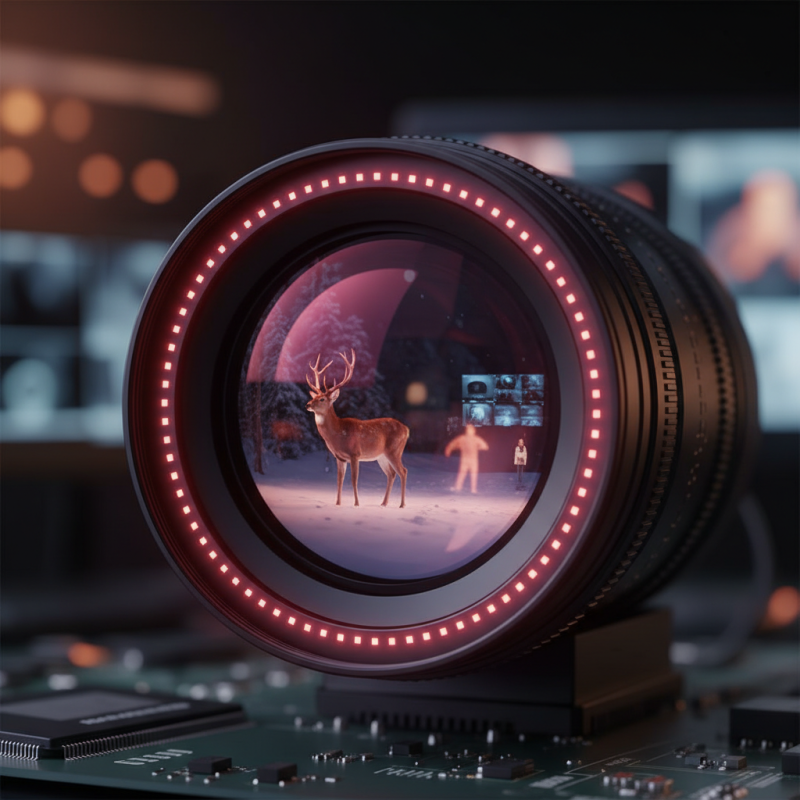
Understanding Infrared (IR) Imaging and Its Applications
Infrared (IR) imaging is a powerful tool for various applications. This technology captures images based on heat emitted by objects. Unlike visible light cameras, Ir Sensors reveal temperature differences. These differences can identify issues not visible to the naked eye.
Infrared imaging finds applications in numerous fields. In medical diagnostics, it helps detect abnormal heat patterns in tissues. This can assist in early disease detection. In construction, it locates heat leaks in buildings, improving energy efficiency. Wildlife researchers use IR cameras to monitor animal activity without disturbance. Despite its advantages, IR imaging has limitations. It can be affected by environmental conditions. Understanding these factors is crucial for effective use.
Choosing the right IR lens is essential. Different lenses serve distinct purposes based on the desired outcomes. Factors such as wavelength range and field of view matter. Users must adapt their choices to specific needs. The right lens maximizes the potential of IR imaging, while the wrong one may yield poor results. Ultimately, striking a balance between technical capability and practical application is key.
Best IR Lens for Your Imaging Needs? - Understanding Infrared (IR) Imaging and Its Applications
| Lens Type | Wavelength Range (µm) | Focal Length (mm) | Aperture (f-stop) | Field of View (°) | Application |
| Standard IR Lens | 0.8 - 1.7 | 25 | f/1.4 | 45 | General Imaging |
| Long-Wave IR Lens | 8 - 14 | 50 | f/2.8 | 30 | Thermal Imaging |
| Near-Infrared Lens | 0.7 - 1.1 | 35 | f/1.8 | 50 | Spectroscopy |
| Variable Focus IR Lens | 1 - 10 | 70-100 | f/4.0 | 60 | Surveillance |
| Fixed Focus IR Lens | 5 - 12 | 25 | f/2.0 | 75 | Industrial Monitoring |
Types of Infrared Lenses Available in the Market
When exploring infrared lenses, it's vital to understand the various types available. Different applications require specific lens characteristics. Standard infrared lenses are crafted for general usage, providing good performance across a range of wavelengths. These lenses can be a great starting point for beginners.
For specialized applications, narrowband lenses come into play. Designed to filter specific wavelengths, these lenses excel in precision imaging. They are often used in scientific settings, where accuracy is crucial. However, using narrowband lenses might limit flexibility. It's essential to consider whether the benefits outweigh the constraints.
Wide-angle infrared lenses offer a broader field of view. These lenses capture more of the scene. They are ideal for landscape photography or large subject areas. Yet, the trade-off can be distortion, especially at the edges. Photographers must be aware of these potential issues and adjust their techniques accordingly. This understanding enhances the overall imaging experience, making it crucial for informed decision-making.
Factors to Consider When Choosing an IR Lens
When selecting the best infrared (IR) lens for imaging, several critical factors must be considered. Understanding your imaging needs is essential. The spectral range required often dictates the lens choice. Many applications utilize lenses in the 700 nm to 14,000 nm range. Reports indicate that IR lenses covering this range are crucial for thermal imaging and night vision.
Another significant factor is the lens material. Common materials include Germanium and Zinc Selenide. These offer high transmission in the IR spectrum but can differ in durability and cost. According to recent industry analysis, nearly 40% of users identified material stability as a top priority. Selecting the right material directly impacts image quality and longevity of lens functionality.
Focal length and field of view also play vital roles. A longer focal length provides more detail, while a wider field of view captures larger scenes. Balancing these aspects can be challenging. According to a 2022 report, about 50% of users expressed frustration with achieving optimal detail in wide shots. Each application may require a unique combination of these elements to achieve desired results in thermal imaging or analysis.
Top Recommendations for Best IR Lenses Based on Imaging Needs
Choosing the right infrared (IR) lens is crucial for your imaging needs. Different applications, such as surveillance, scientific research, or artistic photography, require distinct lens characteristics. Opt for a lens that matches your specific needs, whether you're looking for a broad spectrum or a specific wavelength range.
When selecting an IR lens, consider the sensor compatibility. Ensure the lens pairs well with your camera sensor to achieve optimal results. Some lenses may produce distortion at the edges, which could impact your imaging quality. Check reviews and user experiences to gauge any potential issues.
Tips: Always test the lens in real-world scenarios. A controlled environment may not reveal flaws. Be open to adjusting your setup based on performance. Also, explore different focal lengths to understand how they affect depth of field and focus. Embrace the learning curve; not every lens will meet your expectations immediately.
Maintenance Tips for Extending the Life of Your IR Lens
Maintaining the longevity of your infrared (IR) lens is essential for optimal imaging performance. A recent industry report indicates that proper care can extend the lifespan of your lens by up to 50%. Here are some tips to consider.
Regular cleaning is vital. Dust and fingerprints can obscure images. Use a microfiber cloth and lens cleaning solution designed for optics. Avoid harsh chemicals that could damage coatings. Ensure your hands are clean before touching the lens. A single smudge can alter the quality of your images.
Another critical aspect is storage. Always keep the lens in a padded case when not in use. Extreme temperatures can degrade the lens and its coatings. Ideally, store the lens in a cool, dry place, away from excessive moisture. This simple habit can significantly reduce the risk of fungus growth.
Lastly, check the protective filters regularly. They can get scratched or dirty, affecting image clarity. Consider replacing them annually or when you notice any imperfections. Paying attention to these details contributes to a longer lifespan for your IR lens, enhancing your imaging experience.
Best IR Lens for Your Imaging Needs
This chart illustrates the average lifespan of different types of infrared (IR) lenses, along with maintenance frequencies recommended to extend their life. Proper maintenance can significantly enhance the performance and longevity of your IR lenses.
